

Mind SanctuaryPsychology · Bangkokไทย
Menu
Mind Sanctuary Psychology Bangkok: individual counselling, couple counselling, group therapy, corporate wellbeing
Psychology & counselling in Sukhumvit, Bangkok

Psychologist and therapist in Bangkok: a calm place to talk

A calm place to talk, with someone who understands your world.

A boutique, multicultural counselling practice for professionals, expats and young adults. Choose the counsellor who fits you, and work through stress, burnout, relationships and change at your own pace.

  • In person & online
  • Counselling in English, Thai and French
  • Confidential
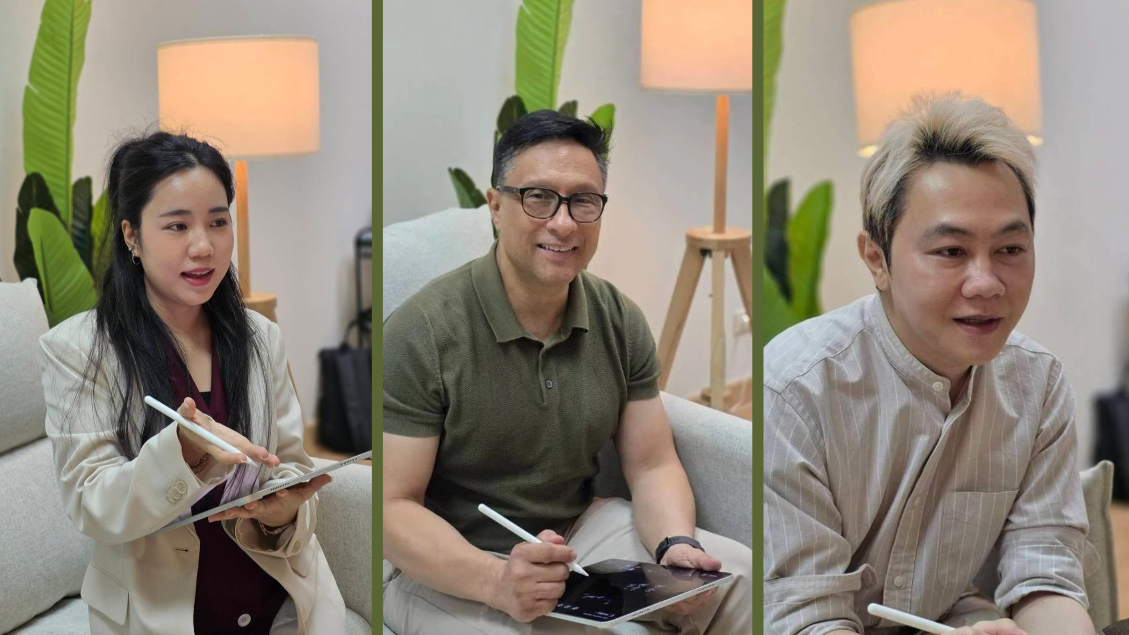
Three Mind Sanctuary counsellors listening to a client in a warm counselling room

Support for the pressures of work, life and living between cultures.

Whether it has been building for years or arrived suddenly, you don't need a diagnosis to start. Many clients come simply because something feels harder than it should.

How we work

We use an integrative approach, because no one method fits every person. Depending on your needs, your counsellor may draw on person-centred therapy, cognitive behavioural therapy (CBT), Gestalt therapy, solution-focused approaches, mindfulness-based approaches, and, depending on training, psychodynamic, schema, family, couple or emotional-regulation work.

Choose the person who fits you.

Our team spans different ages, cultures and careers. The right fit matters, so you choose who you work with. All of our counsellors practise under regular professional supervision.

Pascal Sreshthaputra

Pascal Sreshthaputra

Founder of Mind Sanctuary
Counselling Psychologist | Master’s in Counselling Psychology, Assumption University (ABAC)
Languages: English · French · Thai

I am a Thai–French counselling psychologist, former senior executive and long-time meditation instructor. After many years in senior business leadership, I understand the pressure of responsibility and performance, and I help you find realistic ways forward that fit your actual work and life.

My style is practical, warm, empathic and non-judgmental. Counselling should help you understand yourself more deeply and give you practical ways to respond when life feels overwhelming.

How I work

I use an integrative approach and adapt the work to your needs.

  • Person-centred therapy: a safe, accepting space to speak openly without needing to perform.
  • Gestalt therapy: awareness of emotions, body responses and unfinished experiences.
  • Cognitive behavioural therapy: link thoughts, emotions and behaviour, and develop more helpful responses.
  • Mindfulness-based approaches: notice stress and emotion so you can respond rather than react.
  • Couple and family therapy: communication, conflict, family roles and recurring patterns.
  • Art therapy approaches: images and creative expression when feelings are hard to put into words.

Who I work with

  • Professionals, managers and leaders: burnout, overthinking, difficult decisions, career transitions
  • Expatriates and bicultural people: cultural adjustment, belonging, identity
  • Couples and multicultural couples: communication, conflict, emotional distance
  • Families: communication, changing roles, intergenerational and cultural differences
  • Life transitions and emotional overwhelm: separation, grief, loss, major changes, stress, anxiety or panic
  • Employee, manager and executive stress
  • Employee stress and burnout
  • Expatriation and cultural adjustment
  • Multicultural relationships
  • Career and identity
  • Midlife transitions
  • Separation and relationship change
  • Meaning and personal direction
  • Couples
  • Family therapy
Read full profile

About me

I am a Thai–French counselling psychologist, former senior executive and long-time meditation instructor. Having lived and worked across Asia and Europe, I understand how culture, family, professional life and identity can shape stress, relationships and emotional wellbeing.

Before becoming a psychologist, I spent many years in senior business and leadership roles. This helps me understand the realities of responsibility, performance pressure, workplace relationships, difficult decisions and balancing professional and personal life. It also helps me work with clients on realistic solutions that take their actual work context into account.

My style is practical, warm, empathic and non-judgmental.

How I work

I use an integrative approach and adapt the work to the person and the situation.

  • Person-centred therapy: provides a safe, accepting space to speak openly and understand what you are experiencing.
  • Gestalt therapy: explores emotions, body responses, relationship patterns and experiences that may still influence you.
  • Cognitive behavioural therapy: helps identify links between thoughts, emotions and behaviour and develop more helpful responses.
  • Mindfulness-based approaches: help develop greater awareness of stress and emotions so you can respond rather than react automatically.
  • Couple and family therapy: explores communication, conflict, family roles, emotional distance and recurring relationship patterns.
  • Art therapy approaches: can help explore feelings and experiences that may be difficult to express through words alone.

The aim is not to eliminate difficult emotions, but to develop greater awareness, flexibility and choice.

Who I work with

I mainly work with adults, couples and families experiencing:

  • Professional pressure: stress, burnout, anxiety, overthinking, perfectionism, leadership pressure, difficult decisions and career uncertainty
  • Emotional distress: anxiety, panic, emotional overwhelm and difficulty coping with pressure or change
  • Expatriate and bicultural challenges: adjustment, loneliness, belonging, identity and loss of confidence
  • Couple and family difficulties: conflict, communication problems, emotional distance, parenting concerns and changing family roles
  • Multicultural relationships and families: cultural differences in communication, expectations, values, parenting and family life
  • Major life transitions: separation, divorce, grief, relocation, career change, retirement, loss of direction or uncertainty about what comes next

Professional pressure and burnout

A demanding career can bring achievement and meaning, but also responsibility, isolation, fear of failure and exhaustion.

Because I have worked in senior leadership roles myself, I understand that simple advice such as “work less” or “set boundaries” may not reflect the realities of the job.

Counselling can help you distinguish between what needs to be endured, what can be changed and where a different strategy may be needed. The goal is not to reduce ambition, but to find more sustainable ways of functioning.

Living and working across cultures

Culture affects how we communicate, express emotion, handle disagreement and understand relationships.

Directness may feel constructive to one person and confrontational to another. Silence may mean respect to one person and withdrawal to another.

In multicultural workplaces, couples and families, I help clients explore these differences without assuming one side is simply right or wrong. The aim is to build ways of relating that work across cultural differences.

Resilience and emotional regulation

I see resilience as the ability to adapt, recover and move forward without losing connection with yourself.

Emotional regulation is not about suppressing feelings. It is about recognising emotions earlier, understanding triggers and creating more choice in how you respond.

I also draw on positive psychology by exploring strengths, values, meaning and whether the life you are living remains aligned with what matters to you.

What you can expect from me

I do not believe my role is to make decisions for you.

My role is to provide a safe relationship, help you understand what is happening more clearly and, when useful, introduce practical psychological tools and new perspectives.

Some clients need deeper exploration. Others need practical strategies. Many need both.

Education and training

  • Master’s Degree in Counselling Psychology, Assumption University (ABAC)
  • Official member, Accredited Counselors of Thailand (ACT)
  • Person-centred therapy and Gestalt therapy
  • Cognitive behavioural therapy, including training through the Beck Institute
  • Mindfulness-based approaches and emotional regulation
  • Couple and family therapy
  • Grief counselling
  • Art therapy (university elective module)
  • Positive psychology and resilience
  • Multicultural and cross-cultural counselling
  • Regular professional supervision

Beyond the therapy room

  • Former senior executive in international organisations
  • Thai–French background with experience across Asian and Western environments
  • Long-time meditation instructor
  • Competitive strength athlete with national-level records

When referral may be recommended

Some difficulties may require psychiatric, medical or more intensive specialist care. I may recommend referral or collaborative care where appropriate, including for:

  • Active psychosis or severe disturbance in reality testing
  • Acute manic or severe mood episodes
  • Immediate risk of suicide, serious self-harm or harm to others
  • Severe substance dependence
  • Severe eating disorders requiring medical monitoring
  • Acute psychiatric conditions requiring hospitalisation
  • Conditions requiring psychiatric medication assessment

Where appropriate, I can help identify suitable psychiatrists, hospitals or specialist services.

Book with Pascal
Niruj Laoisariyagul (Tom)

Niruj Laoisariyagul (Tom)

Associate founder of Mind Sanctuary
Counsellor | Master’s Candidate in Counselling Psychology, Assumption University (ABAC)
Languages: Thai · English

I am a counsellor with a long background in business, both across Southeast Asia and in Thailand. I know what it feels like to carry pressure, make hard decisions and look after other people. I work with work stress, relationships and couples, family, teens and children plus people living between cultures. My style is warm, practical and free of judgment. I combine different approaches to fit each person, in Thai or English, in person or online.

How I work

I do not stick to one theory. My approach is integrative and adjusted to your story and pace.

  • A safe space to speak freely without being judged.
  • Practical tools for repeating thoughts, strong emotions and small steps you can take.
  • Old patterns that you have carried for a long time and still affect you.

Who I work with

  • Working professionals and business owners: pressure, burnout, career decisions
  • Couples, relationships and family
  • Teens, students and children (together with parents)
  • Expats and people living between cultures
  • Work stress and burnout
  • Couples and relationships
  • Family
  • Teens and students
  • Children
  • Living between cultures
  • Emotions and overthinking
Read full profile

About me

Before counselling, I spent many years in marketing and management across Southeast Asia. I worked with people from Asia, Europe, Africa and Russia and led teams from many cultures. Later I came back to Thailand to run my family business and my own businesses in food, fashion, music, entertainment, technology and real estate.

Because of this, I understand people who work hard, make big decisions and have others depending on them. Many of them look fine from the outside but feel very tired inside, with no one to talk to.

Friends, family and people around me have always come to me when they needed someone to talk to. That is why I spent many years studying and training in counselling through a wide range of courses, which led me to a master’s program in Counseling Psychology. I enjoy talking with people of every age, job and gender, because no two stories are the same.

How I work

I do not stick to one theory. My approach is integrative. I choose and adjust methods to fit your story, your pace and what you want to get from our sessions.

  • Sometimes you may just need a safe space to speak freely without being judged.
  • Sometimes you may want practical tools you can try, like noticing repeating thoughts, handling strong emotions or planning small steps you can actually take.
  • Sometimes we may need to look at old patterns you have carried for a long time and see how they still affect you.

It is not my job to give you answers or make decisions for you. I ask questions that help you see yourself more clearly, see more options and choose what is right for you.

I receive regular supervision from experienced professionals. I also keep what you share confidential in line with professional ethics.

Who I work with

  • Working professionals and business owners: work pressure, burnout, career decisions, workplace conflict, work and life balance
  • Relationships and couples: the same fights again and again, poor communication, emotional distance, unsure whether to stay, starting over after a breakup. Individuals and couples are both welcome.
  • Family: parent and child relationships, family expectations, roles you feel you have to carry
  • Teens and students: study stress, adjusting to change, friendship and bullying, choosing the next path
  • Children: working together with parents or caregivers
  • Expats and people living between cultures: adjusting to life in a new place, loneliness, cultural differences at work, in couples and in families
  • Thoughts and emotions: worry, overthinking, managing emotions, self-confidence, big life changes

Clients under 18 need consent from a parent or guardian before starting.

Counselling experience

  • Individual counselling, in person and online, on thoughts, relationships, family, work and study
  • Individual and group counselling with students at Assumption College Bangrak, under the supervision of the school psychologist
  • Psychology work with the Department of Psychology, Faculty of Social Sciences, Kasetsart University
  • Designed and led group workshops on resilience, emotional awareness, social skills and adjustment, preparing for university and self management

Education

  • All of our counsellors practise under regular professional supervision.
  • Official member, Accredited Counselors of Thailand (ACT)
  • Master’s Candidate in Counselling Psychology, Assumption University (ABAC)
  • Bachelor of Communication Arts, Assumption University

Training and certificates

Cognitive Behavioural Therapy and Schema Therapy

  • Basic Skills in Cognitive Behavioural Therapy, Cognitive and Behavioral Therapy Association of Thailand (CAT) with Chulalongkorn University
  • Imagery Rescripting & Experiential Techniques in Cognitive Behavioural Therapy, CAT
  • Cognitive Behavioural Therapy for Workplace, CAT
  • Cognitive Behavioural Therapy for Student Mental Health, CAT
  • Cognitive Behavioural Therapy for Adolescent Suicide & NSSI, CAT
  • Healing Together: Cognitive Behavioural Therapy Strategies for Children and Their Caregivers Facing Everyday Trauma, CAT
  • Super Skills for Life: Transdiagnostic Program to Prevent Anxiety and Depression in Children and Adolescents, by Prof. Cecilia Essau, CAT
  • Introduction to Schema Therapy, Department of Psychology, Chiang Mai University
  • Schema-Focused Psychotherapy for Challenging Clients: Integrating Cognitive Behavioural Therapy, Psychodynamic and Gestalt Approaches, Faculty of Psychology, Chulalongkorn University

Couples and family

  • Learning Emotionally Focused Couple Therapy (EFT), Faculty of Psychology, Chulalongkorn University
  • Introduction to Couple Therapy, CAT
  • Family Counseling, Department of Mental Health, Thailand

Teens and children

  • Adolescent Counseling Program, Basic and Advanced, Department of Mental Health, Thailand. Topics include motivational interviewing, depression, violence, school bullying, gaming addiction, substance use, self-harm, sexuality plus counselling by phone and social media
  • Teacher Empowerment Program for Child Behavior Management, Northeastern Institute of Child and Adolescent Mental Health
  • Adolescent and Youth Health, Department of Health, Thailand
  • Law and Rights Related to Child and Youth Health, Department of Health, Thailand

Counselling skills

  • Fundamental Counseling Certificate Program, iSTRONG Mental Health
  • Advanced Counseling Certificate Program, iSTRONG Mental Health
  • Professional Counseling Certificate Program, iSTRONG Mental Health
  • Supervised counselling practice at Fundamental and Advanced levels, iSTRONG Mental Health
  • Counseling Psychology for Beginners, Chiang Mai University
  • Mind First Aid, TIMS Faculty of Psychology Chulalongkorn University with Ratchasuda Institute Mahidol University

Mental health and psychology

  • Anxiety and Related Disorders, American Psychological Association
  • Understanding Depression, Harvard Health Publishing
  • Positive Psychology, Harvard Health Publishing
  • Managing Emotions in Times of Uncertainty & Stress, Yale University
  • Introduction to Psychology, Yale University
  • Introduction to Cognitive Psychology and Neuropsychology, University of Cambridge
  • Body Language as a Mind Reading, Mahidol University
  • Bridging Disciplines: Incorporate Psychology into Your Endeavor, Faculty of Psychology, Chulalongkorn University
  • Psychology Knowledge for the Public, Faculty of Psychology, Chulalongkorn University

Plus other training and study that I keep adding to.

When I refer you to others

Some concerns need specialist psychiatric, medical or more intensive mental health care. I may recommend referral or collaborative care for:

  • Psychotic disorders, including schizophrenia or active psychosis
  • Bipolar disorder during an acute manic or severe mood episode
  • Immediate risk of suicide, serious self-harm or harm to others
  • Severe substance dependence requiring specialist treatment or detoxification
  • Severe eating disorders requiring medical or specialist monitoring
  • Acute psychiatric conditions requiring hospitalisation or intensive treatment
  • Conditions requiring psychiatric medication assessment or medical evaluation

I also refer when a legal case or legal documents are needed. Where appropriate, I can help you identify suitable psychiatrists, hospitals or specialist services.

Book with Tom
Lalita Rungureang (Mymind)

Lalita Rungureang (Mymind)

Associate founder of Mind Sanctuary
Counsellor | Master’s Candidate in Counselling Psychology, Assumption University (ABAC)
Languages: Thai · English

I am a Thai counsellor with a professional background in business, having previously worked in the marketing, advertising, and corporate sectors for many years. I integrate Person-Centred Therapy, Cognitive Behavioural Therapy, Gestalt Therapy, Psychodynamic Therapy, and Mindfulness to tailor intervention plans to each client’s needs.

How I work

I integrate five approaches and tailor them to each client.

  • Person-centred therapy: the foundation of my work, a safe, accepting space to speak freely.
  • Cognitive behavioural therapy: practical ways to link thoughts, emotions and behaviour.
  • Gestalt therapy: attention to present emotions, body responses and old patterns.
  • Psychodynamic therapy: understanding how past experiences shape current relationships and reactions.
  • Mindfulness: noticing stress and emotion without being controlled by them.

Who I work with

  • Relationships and couples, including heartbreak
  • Professionals and entrepreneurs: stress, burnout, career decisions
  • Students, parents and child development
  • Grief, self-esteem and recurring thoughts
  • Expats, international students and intermarriage
  • Relationships and couples
  • Heartbreak
  • Stress and burnout
  • Career decisions
  • Students and parents
  • Child development
  • Grief and self-esteem
  • Expats and intermarriage
Book with Lalita
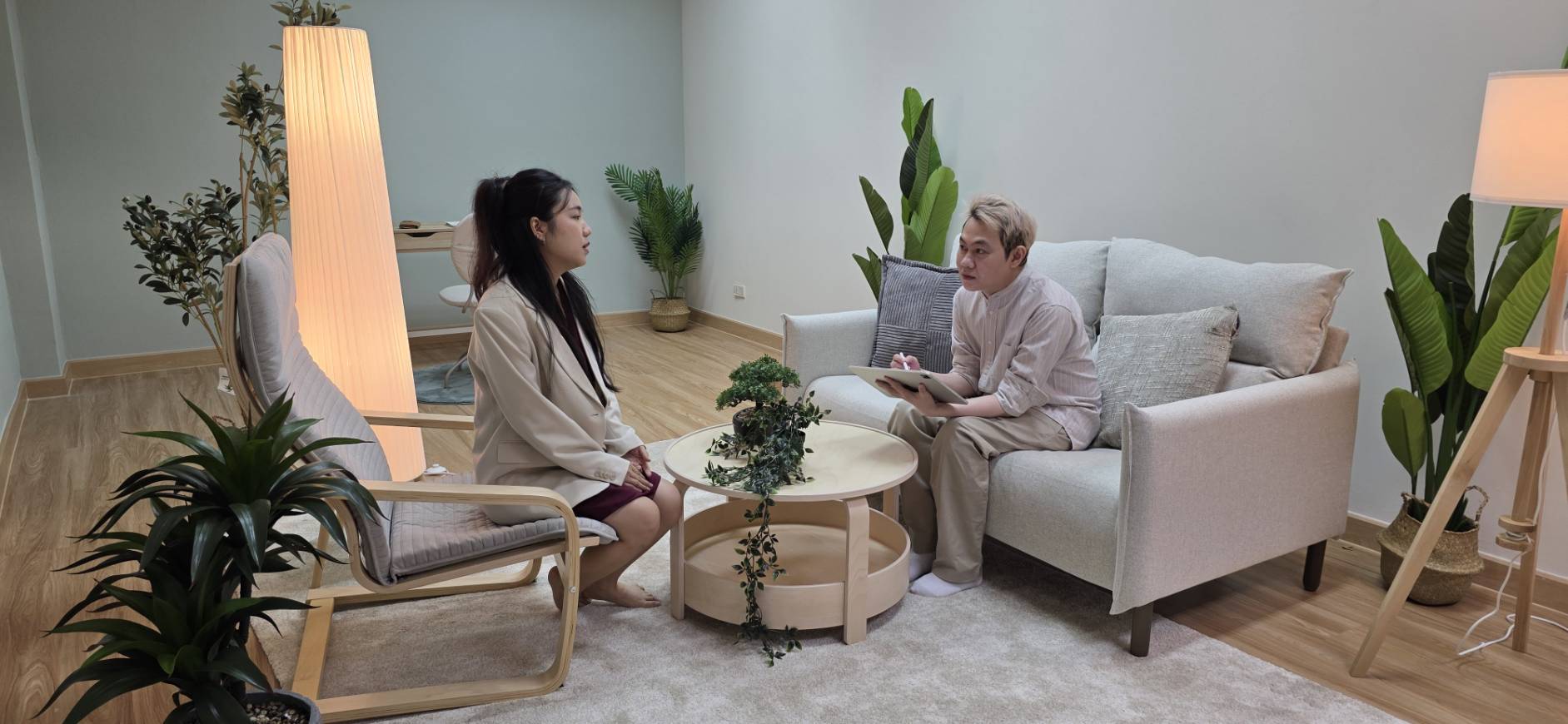
A counsellor and client talking in a warm, green counselling roomA counsellor listening to a client in a calm counselling roomTea, a plant and soft seating in the counselling room

Clear fees, with savings on session packages.

Individual sessions are 60 minutes. Packages lower the cost per hour.

Face-to-face, individual
SessionsPrice ฿€$Per session ฿
Single session฿2,700€70$80฿2,700
3 sessions฿7,700€200$230฿2,567
7 sessions฿17,000€450$510฿2,429
Online, individual
SessionsPrice ฿€$Per session ฿
Single session฿2,300€60$70฿2,300
3 sessions฿6,550€170$200฿2,183
7 sessions฿14,500€390$430฿2,071
Couples, 60 minute session
SessionsPrice ฿€$Per session ฿
Single session฿2,900€80$90฿2,900
3 sessions฿8,250€220$250฿2,750
7 sessions฿18,250€490$540฿2,607
Couples, 90 minute session
SessionsPrice ฿€$Per session ฿
Single session฿3,500€90$110฿3,500
3 sessions฿10,000€270$300฿3,333
7 sessions฿22,050€590$660฿3,150

Payment: sessions should be paid in advance, 24 hours before the appointment. You can pay by Thai QR code or Wise (international bank transfer). Payment details are sent with your booking confirmation.

Appointments cancelled or rescheduled with less than 24 hours’ notice may incur a ฿1,000 late-cancellation fee. Missed appointments may be charged at the full session fee. Genuine emergencies are considered individually.

The Mind Sanctuary team
Our vision

At Mind Sanctuary, we create a safe, welcoming space to pause, speak openly, reconnect and grow.

Our team brings Thai, Asian and international perspectives and real-world experience in senior leadership, entrepreneurship and multicultural environments. We support young adults, professionals, executives, business owners, expatriates and multicultural couples.

With compassion, cultural understanding and practical psychological support, we help people regain clarity, build resilience and move forward with confidence.

For teams and organisations

Wellbeing for teams and organisations.

We bring the same professional grounding to teams and organisations, with programmes built around resilience and real working life.

A small group workshop in a relaxed seating circle

Healthier employees. Stronger teams. Better performance.

A healthy, motivated and engaged workforce is essential to long-term business success. Our practical, psychology-based workshops help employees develop greater self-awareness, emotional resilience, motivation and stronger professional relationships. Select a programme to see the details.

Purpose · Engagement · Team Connection

Living Our Values at Work

Benefits: Greater self-awareness, employee engagement, motivation and team understanding.

  • 4 hours · half-day
  • From 6 up to 25–30 participants
Programme length is indicative and flexible, depending on the number of participants.View programme +
Objective

Help employees identify their core personal values, understand what truly matters to them, and explore how these values can bring greater meaning, authenticity and motivation to their professional lives.

Benefits
  • Greater self-awareness and understanding of personal motivations.
  • Stronger employee engagement, job satisfaction and sense of purpose.
  • Better alignment between personal values and workplace behaviours.
  • Improved mutual understanding, empathy and team cohesion.
Activities

Participants explore their personal values through a structured card-sorting exercise, identify their most important values, and reflect on how these influence their choices and relationships.

Through small-group discussions and real-life examples, they explore how to express these values more consistently at work and develop practical commitments for everyday situations.

Format
  • Half-day workshop, 4 hours (indicative, flexible depending on the number of participants)
  • From 6 up to 25–30 employees
  • Values card sorting, personal reflection, group sharing and practical action planning
Enquire about this programme
Stress Management · Emotional Balance

Stress & Emotional Resilience

Benefits: Better stress management, emotional resilience, self-regulation and healthier workplace relationships.

  • 4 hours · half-day
  • From 6 up to 25–30 participants
Programme length is indicative and flexible, depending on the number of participants.View programme +
Objective

Help employees understand the psychological and physical effects of stress, recognise their personal stress triggers, and develop practical emotional regulation skills to respond more effectively to workplace challenges.

Benefits
  • Greater awareness of stress triggers and emotional reactions.
  • Improved emotional regulation and ability to remain calm under pressure.
  • Stronger personal resilience and healthier coping strategies.
  • Better communication, relationships and emotional well-being at work.
Activities

Participants explore how stress affects four interconnected dimensions: body, mind, emotions and relationships.

Through interactive exercises, creative expression and group discussions, they learn to identify early signs of stress and recognise their habitual responses.

They also practise emotional regulation techniques, including breathing, grounding, mindfulness and self-awareness exercises, to help restore balance during challenging situations.

Format
  • Half-day workshop, 4 hours (indicative, flexible depending on the number of participants)
  • From 6 up to 25–30 employees
  • Interactive stress-awareness activities, creative and art-based exercises, emotional regulation practice and group discussions
Enquire about this programme
Energy · Focus · Productivity

Finding Your Flow at Work

Benefits: Improved concentration, motivation, work satisfaction and sustainable productivity.

  • 4 hours · half-day
  • From 6 up to 25–30 participants
Programme length is indicative and flexible, depending on the number of participants.View programme +
Objective

Help employees understand how to manage their energy and attention more effectively, recognise the conditions that support deep engagement, and develop healthier and more productive working habits.

Benefits
  • Improved concentration, motivation and employee engagement.
  • Greater awareness of activities that increase or drain personal energy.
  • Better management of daily work demands and mental fatigue.
  • Increased job satisfaction and more sustainable productivity.
Activities

Drawing on positive psychology and the concept of flow, participants explore the difference between managing time and managing energy.

They identify activities and situations that energise or drain them, reflect on moments when they feel fully engaged in their work, and examine how their environment and daily routines influence motivation.

Practical exercises introduce strategies such as task sequencing, managing energy throughout the day, adjusting working environments and developing positive end-of-day routines.

Format
  • Half-day workshop, 4 hours (indicative, flexible depending on the number of participants)
  • From 6 up to 25–30 employees
  • Personal energy audits, flow-awareness exercises, guided reflection, interactive discussions and practical work-planning activities
Enquire about this programme
Communication · Trust · Leadership

The Psychology of Effective Leadership

Benefits: Stronger leadership, better communication, employee trust, engagement and team collaboration.

  • 6 hours · full-day
  • From 6 up to 25–30 managers and team leaders
Programme length is indicative and flexible, depending on the number of participants.View programme +
Objective

Help managers and team leaders understand the psychological foundations of effective leadership and develop the communication, coaching and interpersonal skills needed to motivate and support their teams.

Benefits
  • Stronger leadership and more effective communication.
  • Greater employee trust, inclusion and psychological safety.
  • Improved motivation, engagement and team collaboration.
  • Better ability to develop employees and encourage initiative.
  • A healthier balance between immediate business performance and long-term team development.
Activities

Drawing on person-centered psychology and coaching principles, participants learn how to listen actively, understand employees’ perspectives and communicate with empathy.

Through role-playing and practical leadership scenarios, they explore how to balance directing with coaching, ask constructive questions, provide feedback and encourage employees to take ownership of their work.

The workshop also examines common management behaviours that undermine trust, such as micromanagement, excessive pressure, poor communication and lack of recognition.

Format
  • Full-day workshop, 6 hours (indicative, flexible depending on the number of participants)
  • From 6 up to 25–30 managers and team leaders
  • Leadership case studies, active listening exercises, coaching practice, role-playing, group discussions and personal leadership action planning
Enquire about this programme
Connecting People Through Learning, Collaboration & Fun

Corporate Team-Building Experiences

Benefits: Stronger team cohesion, trust, communication, collaboration, engagement and a greater sense of belonging.

  • 6–7 hours · full-day
  • Flexible group size · larger groups welcome
Programme length is indicative and flexible, depending on the number of participants.View programme +
Objective

Bring employees together through an enjoyable and meaningful shared experience that strengthens trust, communication, collaboration and team spirit.

Benefits
  • Stronger team cohesion and sense of belonging.
  • Greater trust, mutual understanding and cooperation.
  • Improved communication and collaborative problem-solving.
  • Higher employee engagement and a more positive team environment.
  • Opportunities to recognise individual and collective strengths.
Activities

Customised experiences combine psychology-based learning with engaging group activities. Depending on your objectives, these may include:

  • Team games and physical exercises to encourage participation, cooperation and team spirit.
  • Creative and art-based activities to stimulate expression, reflection and shared understanding.
  • Communication and collaboration challenges to strengthen teamwork and problem-solving.
  • Emotional awareness and regulation exercises to help participants manage stress and connect more effectively.
  • Facilitated group discussions to translate shared experiences into practical improvements in everyday teamwork.

Programmes may integrate selected elements from our four workshops.

Format
  • Full-day programme, 6–7 hours (indicative, flexible)
  • Flexible group size, larger corporate groups welcome, with capacity depending on activities and facilitation requirements
  • Team games, movement, creative workshops, experiential learning, group challenges and facilitated reflection
  • Activities and structure adapted to team size, organisational culture and business objectives
Enquire about this programme

Every organisation has its own people, challenges and priorities. Our programmes can be delivered as individual workshops, combined into a broader employee development initiative, or integrated into a customised team-building experience. Helping individuals thrive, teams connect, and organisations perform better.

Employee Assistance Programmes (EAP). We also offer EAPs for all kinds of mental health issues, from anxiety, depression, trauma, separation and eating disorders to grief counselling and more. Pricing depends on the number of employees; contact us to discuss the details.

The business case for staff mental health

Poor mental health is common among working adults, and its cost shows up as absence, reduced output and staff leaving. The studies below come from the World Health Organization, Deloitte, Gallup and Thailand’s Department of Mental Health.

1 in 6

working-age adults had a mental disorder in 2023.

WHO, Mental health at work
12 billion

working days are lost each year to depression and anxiety, a cost of US$1 trillion in lost productivity.

WHO, Mental health at work
£51 billion

is the yearly cost of poor mental health to UK employers. Presenteeism, working while unwell, is the largest part at £24 billion.

Deloitte UK, Mental health and employers (2024)
£4.70

average return for every £1 an employer invests in mental health support, through productivity, fewer absences and retention. Early intervention and prevention return the most.

Deloitte UK, Mental health and employers (2024)
2.9 million

people in Thailand aged 15 and over were diagnosed with depression in 2023, up from 1.3 million in 2015.

Thailand Department of Mental Health, cited in PMC (2025)
20%

of employees worldwide were engaged at work in 2025. Low engagement cost the global economy about US$10 trillion, 9% of global GDP.

Gallup, State of the Global Workplace 2026

What highly engaged teams achieve

23%

higher profitability

78%

lower absenteeism

18%

higher sales productivity

63%

fewer safety incidents

Top versus bottom quartile of engagement, with 21% lower turnover in high-turnover organisations and 51% lower in low-turnover ones. Gallup meta-analysis of 183,806 business units and 3.35 million employees. Replacing an employee costs about 40% of salary for frontline roles, 80% for technical professionals and 200% for leaders and managers.

Figures come from global and UK studies and describe averages. The engagement results show an association with business performance, not a guaranteed outcome for any one organisation.

Sources

Frequently asked questions

What is counselling and how can it help me?

Counselling offers a supportive and confidential space to explore what is happening in your life, understand yourself more clearly and consider new ways forward. People come for stress, relationships, work pressure, anxiety, grief, major life changes, cultural adjustment, difficult decisions or simply a wish to understand themselves better. You do not need a diagnosis or to be in crisis to benefit.

What happens in the first session?

The first session is a chance to get to know you, understand what brings you to counselling and explore what you would like to gain. There is nothing to prepare. You can come as you are.

How do I choose the right counsellor?

Different counsellors bring different personalities, life experiences and approaches. You can choose the profile that feels most relevant, or ask us to help you find a good match. Our team has experience with professionals, couples, families, students, young people, expatriates and people living or working across cultures.

What if I do not feel the counsellor is right for me?

Finding the right fit is an important part of the process. If another counsellor may suit you better, we will help you explore other options within our team or, where appropriate, recommend someone else.

What approaches do you use?

We use an integrative approach, because no one method fits every person. Depending on your needs, your counsellor may draw on person-centred therapy, cognitive behavioural therapy (CBT), Gestalt therapy, solution-focused approaches, mindfulness-based approaches, and, depending on training, psychodynamic, schema, family, couple or emotional-regulation work.

Will you tell me what I should do?

No. Our role is not to make decisions for you. Counselling helps you understand yourself, recognise patterns, consider possibilities and make choices that feel right for you.

How many sessions will I need, and how often?

There is no fixed number. Some people come for a few sessions around a specific concern or decision, others prefer longer-term work. Many begin weekly for continuity, and some prefer every two weeks. You and your counsellor can review this together and change it over time.

How long is a session?

Individual sessions are 60 minutes. Couples can choose 60 or 90 minutes. The longer session gives both partners time to speak and the counsellor time to understand the relationship.

Do you offer online counselling?

Yes. We offer face-to-face and online counselling for individual clients. Online sessions suit busy schedules, frequent travel, or anyone who feels more comfortable speaking from their own space. For many concerns online counselling works very well. The relationship with your counsellor matters more than the format.

Do you work with expatriates and multicultural clients?

Yes. Cross-cultural counselling is central to our work. We understand that living, working or building relationships across cultures brings both richness and challenges, including communication, identity, belonging, family expectations and work culture. We also work with multicultural couples.

Do you work with professionals and business people?

Yes. Several members of our team come from business, management and corporate environments. We work with work stress, burnout, leadership pressure, difficult decisions, career changes, workplace relationships and work-life balance.

Do you work with couples, teenagers and children?

Yes. Couples counselling gives a constructive space to understand recurring conflicts, improve communication, rebuild trust or think about the future of the relationship. Some of our team also work with teenagers, students, children and parents. The right counsellor depends on age and the issue. Clients under 18 need consent from a parent or guardian.

Is counselling confidential?

Yes. What you discuss is treated with care and handled according to professional ethical principles. In limited situations, particularly a serious and immediate concern about someone’s safety, confidentiality may need to be reconsidered. Your counsellor explains this at the start.

Do you prescribe medication?

No. Counselling focuses on psychological and emotional support. If a psychiatric or medical assessment may help, we will discuss it with you and help you find an appropriate professional. See each profile for when referral may be recommended.

What are your fees?

Individual face-to-face: ฿2,700 per 60 minutes. Individual online: ฿2,300 per 60 minutes. Couples face-to-face: ฿2,900 per 60 minutes or ฿3,500 per 90 minutes. Packages of 3 sessions (5% off) and 7 sessions (10% off) are available. See the Fees section for full prices.

How do I pay?

You can pay by cash or by scanning a QR code. For face-to-face sessions, payment is after the first session. For online sessions, payment is in advance by QR code.

What is your cancellation policy?

Appointments can be cancelled or rescheduled without charge with at least 24 hours’ notice. For cancellations with less than 24 hours’ notice, a ฿1,000 late-cancellation fee may apply. Missed appointments may be charged at the full session fee. Genuine emergencies are considered individually.

Do I need a serious problem before coming?

Not at all. Counselling can help when life feels difficult, and it can also be a space for reflection and growth: confidence, relationships, resilience, work-life balance, emotional awareness, personal values or understanding why certain patterns keep repeating.

What if I am in crisis?

Counselling is not an emergency service. If you are experiencing an immediate crisis or believe that you or someone else may be at risk of harm, please contact emergency services or a hospital rather than using the booking form. Hotlines are listed at the bottom of this page.

What happens next

Take the first step.

Send us a message and our intake team will reply within one working day. Everything you share is confidential.

  1. Send your requestTell us a little about what brings you here. We reply within one working day.
  2. A short callA counsellor calls you on LINE or WhatsApp for 10 to 15 minutes to understand what you are looking for and to agree a date for your first session.
  3. Before we meetWe explain the informed consent and intake forms, so you arrive knowing what to expect.
Session type
How would you like to be contacted?

Find us

Mind Sanctuary Psychology BangkokThe Racquet Club, Building 3, 5th floor, Room 501Sukhumvit Soi 49/9, Khlong Tan Nuea, Watthana, Bangkok 10110Mon–Sun · 9:00–20:00Call us for a consultationOpen in Google Maps →
  • By carPark at the Racquet Club and go to Building 3.
  • By BTSTake the BTS to Thong Lo, then a motorcycle taxi to the Racquet Club.
  • Once insideTake the lift to the 5th floor and look for Room 501, Mind Sanctuary.
The entrance to The Racquet Club, Bangkok
LINEWhatsApp